
Kenzo Tange
Japan1913–2005
Born in Osaka Prefecture; raised in places including Imabari.
Pritzker Prize (1987)
Portrait: Hans van Dijk / Anefo / Wikimedia Commons / CC BY-SA 3.0 NL (resized for display)

Ideas to read with
From buildings to the shape of the city
Tange connected architectural form with the way people gather and move. His work spans memorial landscapes, civic buildings, large shared interiors and proposals for growing cities. A useful way to visit his buildings is to look beyond their silhouettes: examine the ground level, the structural system and the spaces between different parts. This is the site's editorial reading of the work. Born in Osaka in 1913 and raised in places including Imabari, Kenzo Tange graduated from Tokyo Imperial University in 1938 and worked for Kunio Maekawa. He later taught at the University of Tokyo. His Hiroshima competition win in 1949 helped establish his international reputation. His practice extended to urban planning and projects abroad. He received the Pritzker Architecture Prize in 1987 and the Praemium Imperiale for Architecture in 1993, and died in March 2005.
Life and architecture
Born in Osaka in 1913 and raised in places including Imabari, Kenzo Tange graduated from Tokyo Imperial University in 1938 and worked for Kunio Maekawa. He later taught at the University of Tokyo. His Hiroshima competition win in 1949 helped establish his international reputation. His practice extended to urban planning and projects abroad. He received the Pritzker Architecture Prize in 1987 and died in March 2005.
- 1913
Born in Osaka
Born in Osaka Prefecture, Japan.
- 193825
Graduates and joins Maekawa
Graduates from Tokyo Imperial University and joins Kunio Maekawa’s office.
- 194633
Begins teaching in Tokyo
Begins teaching at the University of Tokyo and leads the Tange Laboratory.
- 194936
Wins the Hiroshima competition
Wins the competition for Hiroshima Peace Memorial Park and Museum.
- 195542
Hiroshima museum Main Building opens
Main Building of Hiroshima Peace Memorial Museum is completed and opens.
- 195845
Kagawa government office completed
Kagawa Prefectural Government Office is completed.
- 196047
Proposes A Plan for Tokyo 1960
Proposes A Plan for Tokyo 1960.
- 196148
Establishes URTEC
Establishes Kenzo Tange and URTEC.
- 196451
Yoyogi and St. Mary’s completed
Yoyogi National Gymnasium and St. Mary’s Cathedral are completed.
- 196653
Yamanashi culture hall completed
Yamanashi Press and Broadcasting Center is completed.
- 197057
Expo ’70 master plan
Works on the master plan for Expo ’70 in Osaka.
- 198774
Receives the Pritzker Prize
Receives the Pritzker Architecture Prize.
- 199178
Tokyo Metropolitan Government completed
Tokyo Metropolitan Government complex in Shinjuku is completed.
- 199380
Praemium Imperiale
Receives the Praemium Imperiale for Architecture.
- 200592
Dies
Dies in March.
Ages are approximate, based on birth year.
Architecture map
View on map10 buildings by Kenzo Tange. Pan the map and tap a pin.
Architecture
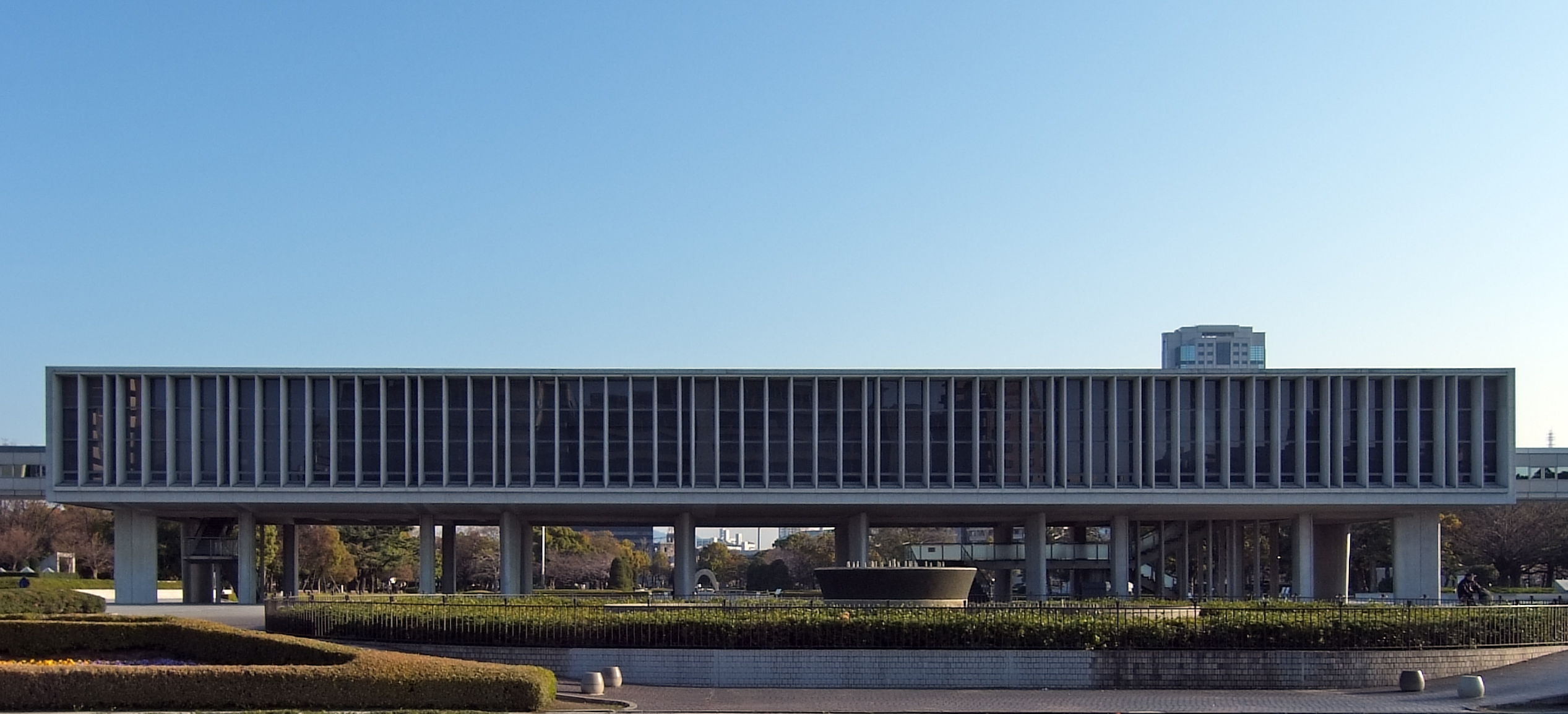
Hiroshima Peace Memorial Museum, Main Building
Hiroshima, Japan · 1955

Yoyogi National Gymnasium
Shibuya, Tokyo, Japan · 1964

St. Mary's Cathedral, Tokyo
Bunkyo, Tokyo, Japan · 1964

Tokyo Metropolitan Government Building
Shinjuku, Tokyo, Japan · 1991

Kagawa Prefectural Government Office, East Building
Takamatsu, Kagawa, Japan · 1958

Yamanashi Press and Broadcasting Center
Kofu, Japan · 1966

Fuji Television Headquarters Building
Minato, Tokyo, Japan · 1996

Kurashiki City Art Museum, Former City Hall
Kurashiki, Okayama, Japan · 1960

Shizuoka Press and Broadcasting Center, Tokyo
Chuo, Tokyo, Japan · 1967

Asian Arts Museum, Nice
Nice, France · 1998