
Kengo Kuma
Japan1954–
Born in Yokohama, Kanagawa.
Portrait: Strelka Institute for Media, Architecture and Design / Wikimedia Commons / CC BY 2.0 (resized for display)

Ideas to read with
Breaking down materials, connecting with place
Kuma often works with small elements, gaps and layers rather than treating a building as a single solid object. The arrangement of wood or stone changes how light, views and the surrounding landscape are experienced. Follow the shaded approach at the Nezu Museum, or compare solid and permeable stone surfaces at the Stone Museum. These offer different ways to understand his work. Born in Yokohama in 1954, Kengo Kuma completed graduate studies at the University of Tokyo in 1979 and established Kengo Kuma & Associates in 1990. His projects range from small cultural buildings and shops to libraries, stadiums and residential towers. Across these different scales, his work explores relationships between materials, construction, the human body and the surrounding environment.
Life and architecture
Born in Yokohama in 1954, Kengo Kuma completed graduate studies at the University of Tokyo in 1979 and established Kengo Kuma & Associates in 1990. His projects range from small cultural buildings and shops to libraries, stadiums and residential towers. Across these different scales, his work explores relationships between materials, construction, the human body and the surrounding environment.
- 1954
Born in Yokohama
Born in Yokohama, Kanagawa.
- 197925
Completes graduate study in Tokyo
Completes graduate studies in architecture and lays the groundwork for practice.
- 199036
Founded KKAA
Establishes Kengo Kuma & Associates.
- 199743
Recognition for Mori Butai
Receives the Architectural Institute of Japan Prize for Mori Butai in Tome.
- 200046
Exploring local wood and stone
The Bato Hiroshige Museum and Stone Museum are completed—different ways of relating materials, light and existing places.
- 200955
A new main building toward the garden
The new main building of the Nezu Museum is completed.
- 201056
Timber assembly at building scale
GC Prostho Museum Research Center is completed.
- 201157
A café on a shrine approach
Starbucks Coffee at Dazaifutenmangu Omotesando opens.
- 201258
Stacked roofs in Asakusa
Asakusa Culture Tourist Information Center is completed.
- 201864
A place for the community
Yusuhara Community Library opens, combining local cedar with spaces for varied ways of staying.
- 201965
Eaves at a large scale
Japan National Stadium is completed by a joint venture.
- 202066
Stone and books as a cultural complex
Kadokawa Culture Museum is completed.
- 202672
Materials renewed
KKAA lists the Bato Hiroshige Museum roof-louver renewal as a 2026 renovation project.
Ages are approximate, based on birth year.
Architecture map
View on map8 buildings by Kengo Kuma. Pan the map and tap a pin.
Architecture

Nezu Museum
Minato, Tokyo, Japan · 2009
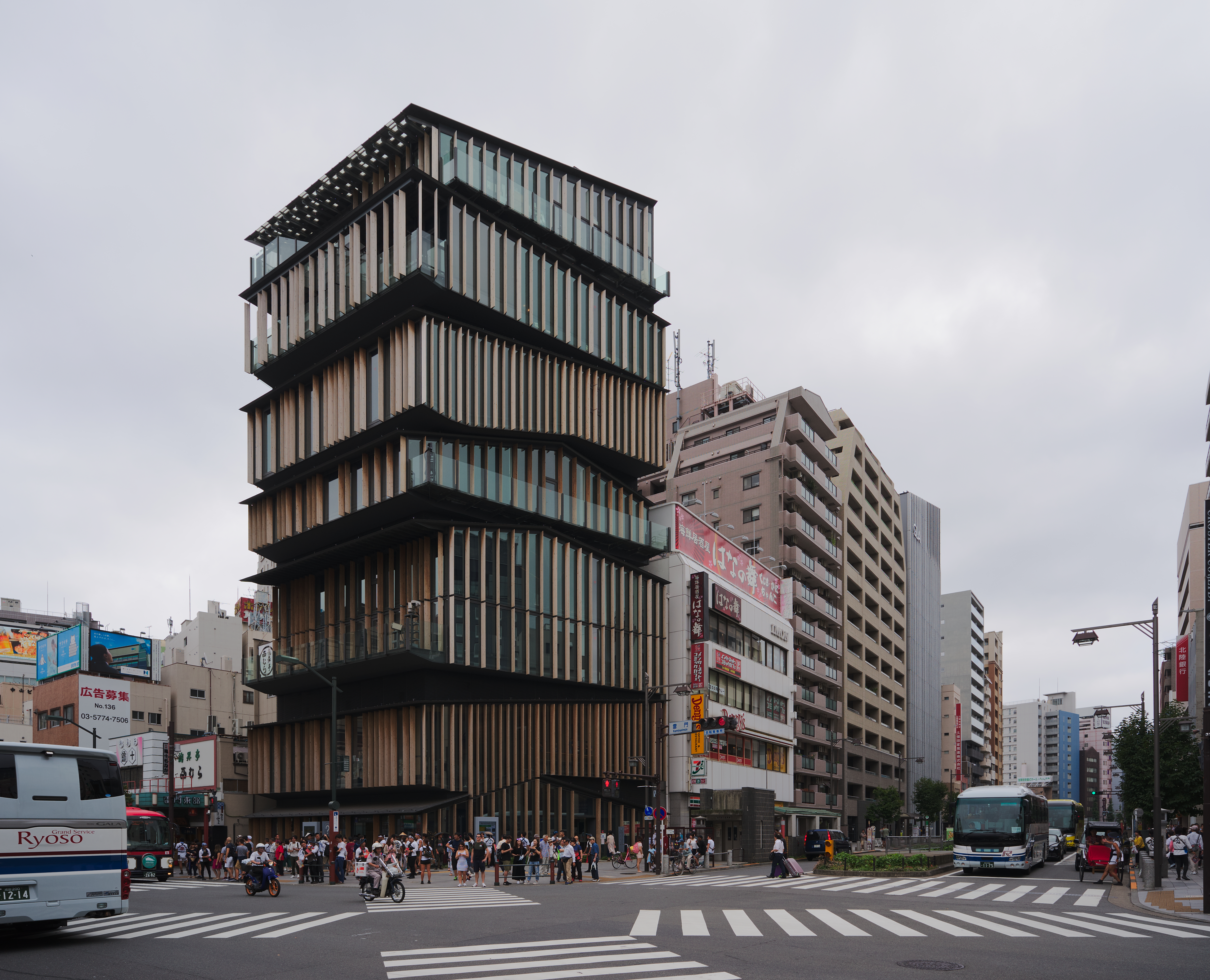
Asakusa Culture Tourist Information Center
Taito, Tokyo, Japan · 2012

Japan National Stadium
Shinjuku, Tokyo, Japan · 2019

Kadokawa Culture Museum
Tokorozawa, Saitama, Japan · 2020

Starbucks Coffee at Dazaifutenmangu Omotesando
Dazaifu, Fukuoka, Japan · 2011

Yusuhara Community Library
Yusuhara, Japan · 2018
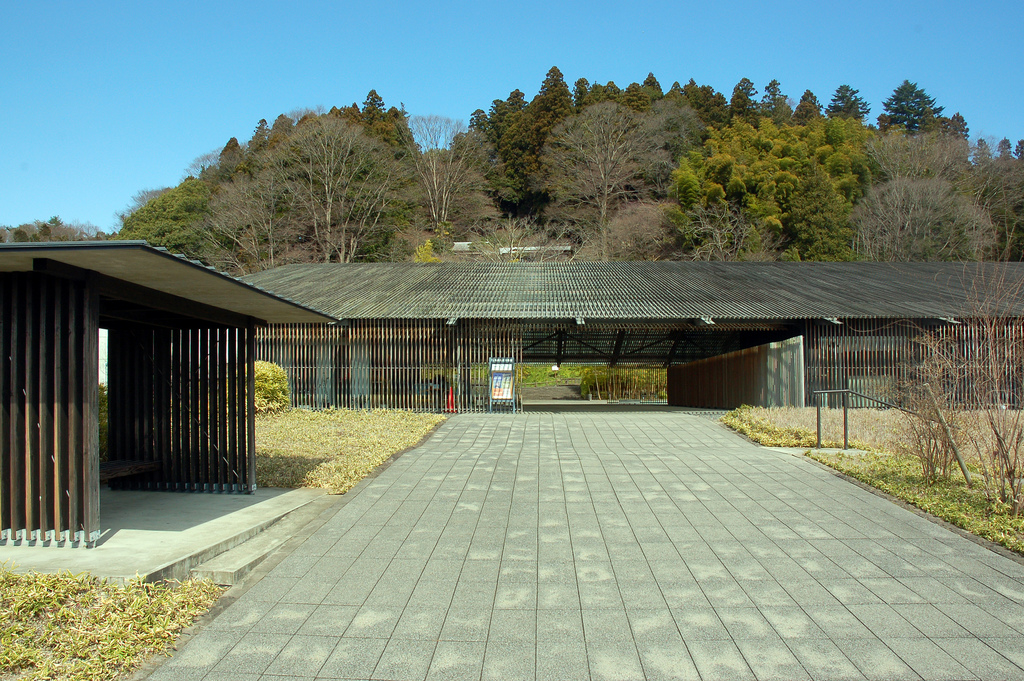
Nakagawa-machi Bato Hiroshige Museum of Art
Nakagawa, Tochigi, Japan · 2000

Stone Museum
Nasu, Tochigi, Japan · 2000

GC Prostho Museum Research Center
Kasugai, Japan · 2010